



High-Efficiency Intelligent Steam Control System
Keyword:
Dyeing System | Inspection System | Online Detection of Printing and Dyeing Process Parameters
Category:
[Current Situation]
Today, textile printing and dyeing enterprises face significant cost pressures. Water and steam are the two primary energy consumables in these operations, accounting for a major share of operating expenses. Precise control of gas and water usage is critical for improving efficiency and competitiveness. Achieving energy savings and emission reductions is essential to ensuring the sustainable development of these companies.
I. Intelligent Steam Energy-Saving System Changzhou Hongda Precise Steam Consumption Solution
System Overview
In thermal systems, steam primarily serves as a carrier of potential energy. Steam network systems mainly consist of key components such as steam generation, transportation, control and monitoring, waste heat and secondary steam recovery, condensate recovery, and advanced condensate treatment. Our company’s intelligent steam measurement and control system focuses on network control and monitoring, enabling a shift from manual fuzzy control to automated quantitative control for textile printing and dyeing steam applications. This not only ensures process stability but also significantly reduces steam consumption in textile printing and dyeing.
System Technical Composition
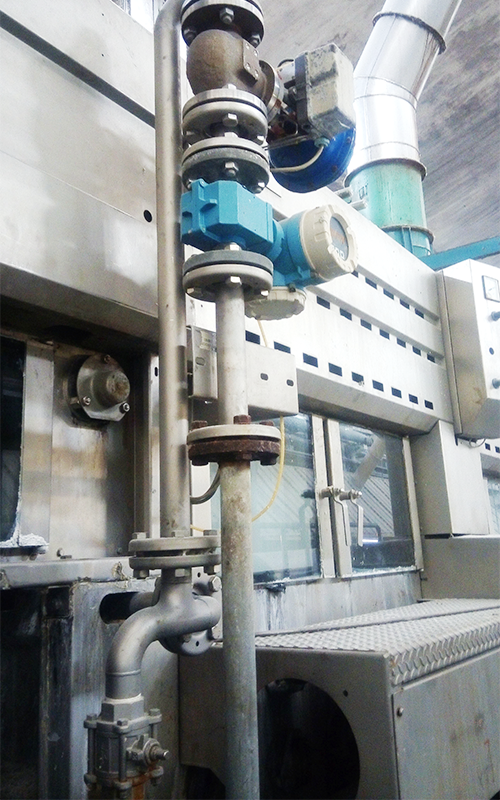
The system employs high-precision electromagnetic flowmeters, pressure transmitters, integrated temperature sensors, and proportional valves to achieve intelligent control of steam pressure. In particular, it provides automatic follow‑up pressure control during changes in steam pressure or vehicle speed, when switching product types, or during shutdowns. Flow and temperature data are aggregated digitally via a network to build an enterprise‑wide steam energy management and control system.
Based on production process requirements, the system centrally manages various process parameters such as pressure, flow rate, vehicle speed, and temperature. Implement optimized control strategies, such as steam flow and constant-pressure regulation, to ensure the continuous stability of all process environmental parameters.
Overview of the Implementation Plan
Pneumatic proportional valves are installed on the main steam pipeline and at each steam‑using point to regulate water flow, while feedback sensors (for pressure, flow, and temperature) form a fully closed‑loop control system. The pressure at each steam‑using point can be set and adjusted independently, resulting in steam savings.
System Functions
(1) By monitoring process parameters such as pressure, flow rate, vehicle speed, and temperature, the system achieves intelligent control of steam pressure and flow during rapid changes, fundamentally replacing the previous manual operation in the workshop and ensuring process stability.
(2) Steam consumption can be reduced by up to 30%, achieving energy savings and emission reductions at the source, thereby fundamentally helping enterprises reduce losses from abnormal production, lower production costs, and improve economic efficiency.
(3) The system effectively implements online monitoring and control of steam pressure and flow, transitioning steam consumption for process production from manual, experience-based operation to precise, quantitative control, thereby reducing overall steam usage. This ensures that production requirements are met without waste, leading to cost savings.
System Advantages
(1) The system effectively implements online measurement and control of steam flow.
(2) Achieve a transition in process production from manual, experience-based operation to precise quantitative control;
(3) Reduced steam consumption;
(4) It both meets the production process requirements and reduces production costs.
II. Value Generated After Implementing the Intelligent Steam Energy-Saving System
1. By monitoring process parameters such as pressure, flow rate, vehicle speed, and temperature, the system achieves intelligent control of steam pressure and flow during rapid changes, fundamentally transforming the previous manual operation methods in the workshop. At the same time, the system effectively implements quantitative control of steam pressure at each machine and each steam consumption point, ensuring process consistency and stability.
2. Steam consumption can be reduced by up to 30%, achieving energy savings and emission reductions at the source, thereby fundamentally minimizing losses from abnormal production, lowering production costs, and enhancing economic efficiency for the enterprise.
3. The system effectively implements online monitoring and control of steam pressure and flow, transitioning steam consumption in process production from manual, experience-based operation to precise, optimized control, thereby reducing steam usage. This ensures that production process requirements are met without waste while also lowering production costs.
4. At the same time, it reduces wastewater discharge and achieves clean production, enabling energy conservation and emission reduction at the source. This fundamentally helps enterprises minimize losses from abnormal production, lower production costs, and improve economic efficiency.
5. The system effectively enables intelligent control of steam consumption, replacing the previous manual operation and reducing workers’ labor intensity.
6. Strengthening the company’s overall technical capabilities and market competitiveness aligns with the company’s strategic direction for improvement.
III. Problems with Existing Steam Trap Drainage in Drying Cylinders
In the steam piping network of textile dyeing and finishing equipment, steam traps are indispensable. After releasing heat, steam inevitably condenses into water, and this condensate must be discharged by steam traps. If the condensate is not removed promptly, it will severely reduce the thermal efficiency of steam‑using machinery. Thus, steam traps automatically prevent steam from escaping while allowing condensate to drain.
A single steam trap serving a bank of drying cylinders cannot drain all the accumulated water from the cylinders!
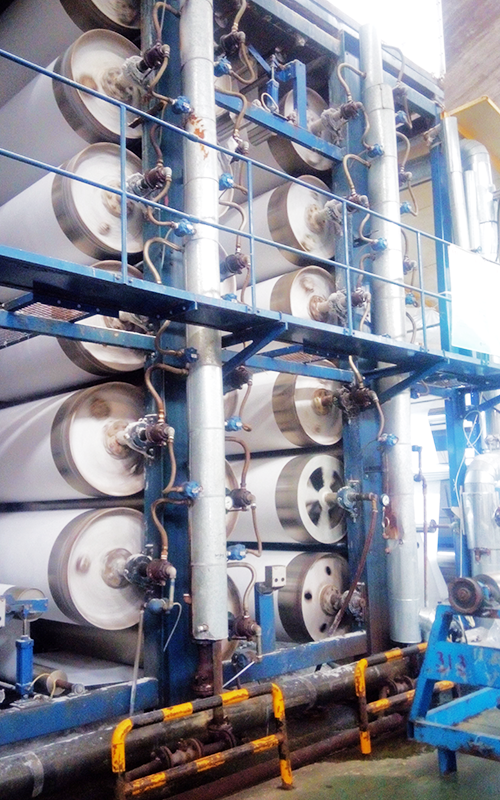
During the drying process in textile printing and dyeing enterprises, the drying cylinder generates substantial condensate when exchanging heat with wet fabric and cold air. This condensate impairs heat exchange and reduces pipeline throughput; therefore, it must be promptly removed to enhance the thermal efficiency of steam-using equipment, thereby saving steam and reducing dye consumption.
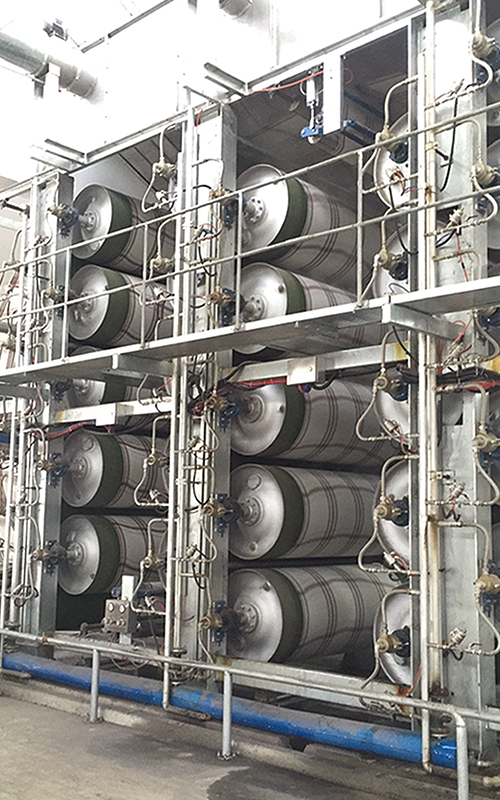
Currently, the industry commonly uses a single steam trap for 10–12 drying cylinders on a single column. Because each cylinder has varying heat-transfer efficiency, this approach readily causes “steam locking” and “steam resistance,” leading to significant condensate buildup inside the cylinders, which can easily result in:
1. Inadequate removal of condensate from the drying cylinder increases its self-weight, thereby affecting bearing life.
2. After “steam lock” and “steam resistance” occur, they impair heat transfer, increase drying time, and hinder productivity improvements.
3. The temperature of the upper drying cylinders is 5–10°C lower than that of the lower ones, further affecting heat transfer efficiency;
4. Condensate cannot be drained promptly, resulting in low steam utilization efficiency, significant steam wastage, poor drying performance, and reduced line speed, all of which negatively impact profitability.
To address the aforementioned issues, some companies have adopted electronic steam traps that use temperature and liquid-level sensing, combined with control valves, to regulate the discharge of condensate from drying cylinders and achieve thorough drainage. However, after a period of market testing, it became clear that this approach did not deliver satisfactory results. The root cause lies in a failure to fully understand the principles of condensate removal; mechanical steam traps themselves are perfectly functional. The problem arises when multiple drying cylinders share only a single trap. A single-column dryer can have up to 12 cylinders, each exhibiting different heat-exchange characteristics. Condensate is generated at varying rates, and under steam pressure, water‑laden streams discharge while dry steam passes through, creating steam lock in the main piping network. Consequently, even the cylinders carrying condensate cannot drain properly, leading to the problems described above. Therefore, electronic steam traps offer no practical benefit to textile printing and dyeing enterprises.
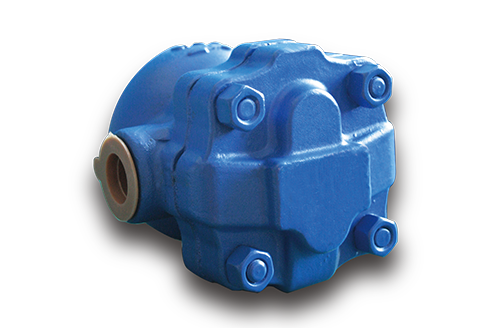
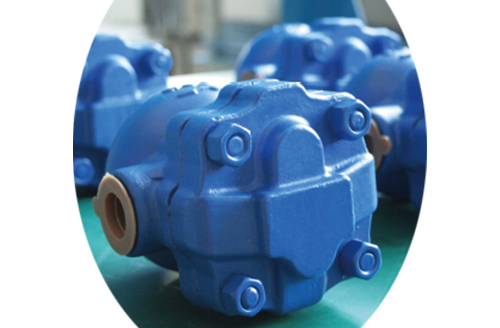
In light of the aforementioned issues, Changzhou Damen has developed and manufactured the HD-20 dedicated energy-saving steam trap for drying cylinders, which effectively drains condensate while preventing steam loss, thereby reducing steam consumption.
IV. Efficient and Energy-Saving Condensate Removal Solution for Drying Cylinders
To maximize steam utilization, a steam trap is installed at the steam outlet of each dryer cylinder. This completely resolves the issue of condensate accumulation in the cylinders, ensuring that condensate is continuously discharged to the lowest possible level, thereby shortening heating time and improving steam efficiency.
After implementing individual condensate drainage, each drying cylinder discharges condensate separately without interfering with the others. Condensate is removed as soon as it forms, effectively reducing the amount of condensate inside the cylinders and preventing air lock. This enhances heat transfer efficiency, lowers steam consumption, and achieves energy savings and cost reduction.
V. Value Delivered After Implementation
(1) Increasing the vehicle speed by approximately 20% thereby boosting production capacity;
(2) Save 20%–30% of steam, reduce production costs, and improve economic efficiency;
(3) Greatly extends the service life of bearings and the steam inlet head, reducing maintenance costs;
(4) Enhancing the company’s market competitiveness aligns with the enterprise’s strategic direction for improvement.
VI. HD-20 Special Energy-Saving Steam Trap for Drying Cylinders
After each drying cylinder is fitted with an HD-20 dedicated energy-saving steam trap for independent condensate drainage, it offers the following advantages:
1. The meticulously designed HD-20 air venting and vapor lock relief device effectively removes cold air during startup and prevents vapor lock from occurring;
2. Independent condensate drainage ensures that the steam condensation from each drying cylinder does not interfere with the others, thereby maximizing the heat transfer efficiency of each individual cylinder.
3. The condensate temperature at the steam trap is below 95°C, with no air leakage and no significant hidden energy losses;
4. It prevents the accumulation of condensate, effectively improving drying performance.
Through tracking and analysis, the HD-20 cylinder-specific energy-saving steam trap has proven highly effective in preventing steam carryover while efficiently draining condensate. After multiple shutdown inspections, the condensate collected inside the cylinders remained below 1 liter, effectively resolving the issue of trapped condensate. The original steam pressure in the cylinders was reduced from 1.5–2 bar to 0.8–1 bar, and the steam flow rate through the cylinders decreased from The steam consumption has been reduced from 1–1.5 t/h to 0.8–1 t/h. The dryer retrofit saves RMB 10 million in steam costs annually, playing a significant role in energy conservation, cost reduction, and controlling the unit product cost.
System Display
 |
 |
 |
| High-Efficiency Intelligent Steam Control System | Steam trap | Steam trap |
 |
 |
 |
| High-Efficiency Intelligent Steam Control System | Steam trap products | Automatic steam trap |
Recommended Products
Tel:+86-519-88856666
Fax:+86-519-85158666
Email:czhongda@czhongda.com.cn
Company Address: No. 220, Taishan Road, High-tech Zone, Changzhou, Jiangsu Province, China
Copyright © Changzhou Hongda Intelligence Technology Co., Ltd.